The village's namesake
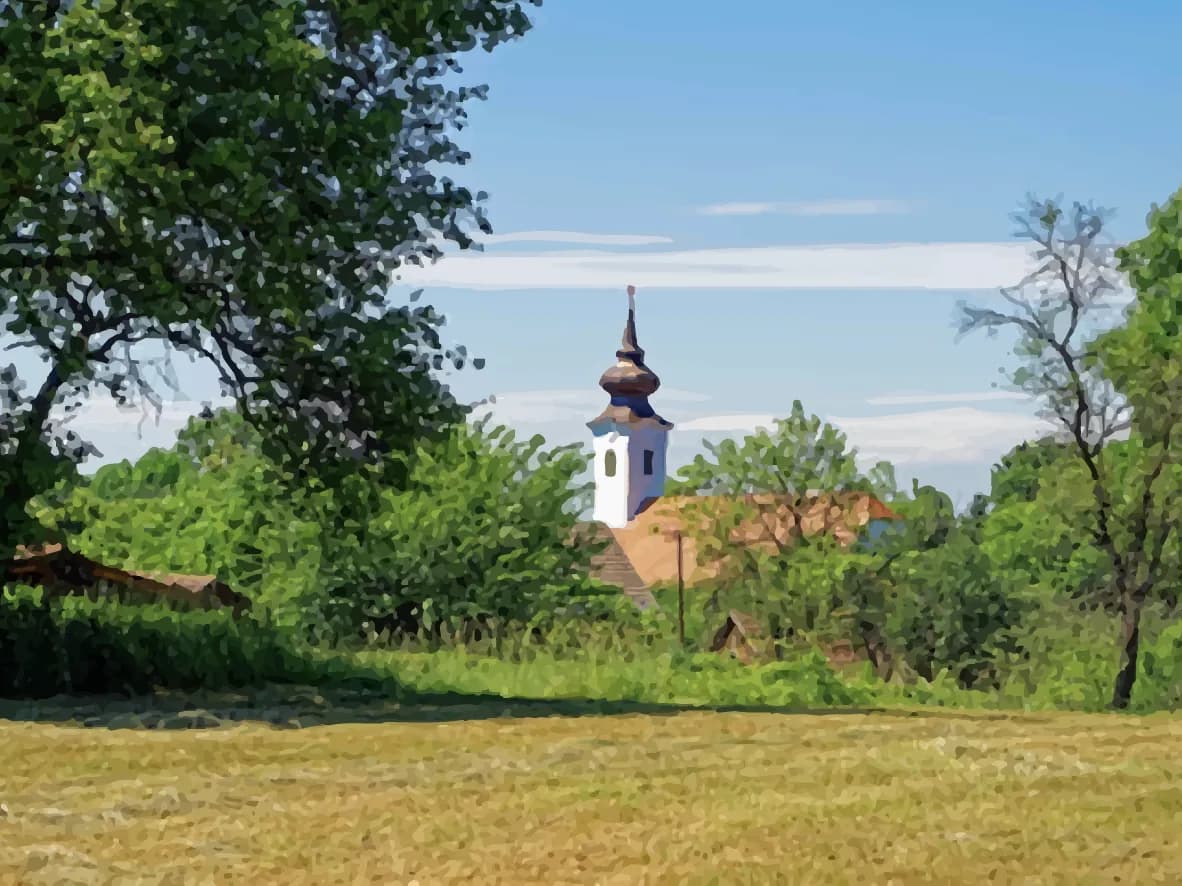
St George's church
The Catholic church carries the name of the saint the village itself is named after. Its tower can be seen from well beyond the hills — it is the white point that catches the eye of anyone arriving.
What to see
No crowds come to Szentgyörgyvölgy, and those who do find their way here usually leave with two things: the memory of a painted ceiling, and a quiet that has become hard to find elsewhere.
Painted coffered ceiling
The best-known building in the village. Inside, a painted wooden coffered ceiling greets you — one of the finest in the Őrség: every panel a small picture of its own, with flowers, stars and tendrils. It is the work of village hands, made with a patience few of us can spare today. Step inside, and you notice the silence first, and only afterwards the colours.
To visit the churches, it is best to ask at the council office or the Community House in advance — they are not permanently staffed.
A walk through the village
The village's namesake
The Catholic church carries the name of the saint the village itself is named after. Its tower can be seen from well beyond the hills — it is the white point that catches the eye of anyone arriving.
Public sculpture
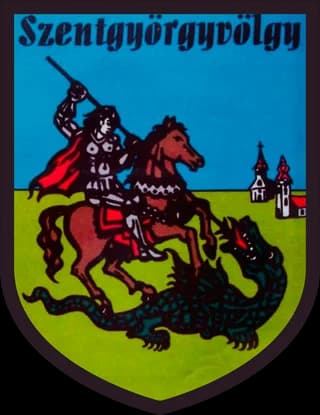
Our coat of arms, stepped out of its shield: the mounted knight and the dragon. It is the same scene from which the village's name grew.
Memorial
A silent witness in the middle of the village. It remembers those who were taken from here, and reminds us that living close to a border did not always mean living in an open place.
Memorial
A public memorial to one of the village's notable sons.
Local heritage
Our past does not live on in buildings alone. In the hands of two craftsmen it still takes shape — one works in wood and stone, the other in clay.
Sculptor
A sculptor with roots in Szentgyörgyvölgy, working in wood and stone.
Potter, Master of Folk Art
The living tradition of Zala pottery: wheel-thrown vessels that carry on the same shapes once used in every kitchen here. “Master of Folk Art” is Hungary's highest distinction for a traditional craftsperson.
Your choice is remembered on this device.
Your browser's own zoom (Ctrl/⌘ and +) also works on this site.