The village
A village among the hills, at the edge of the Őrség
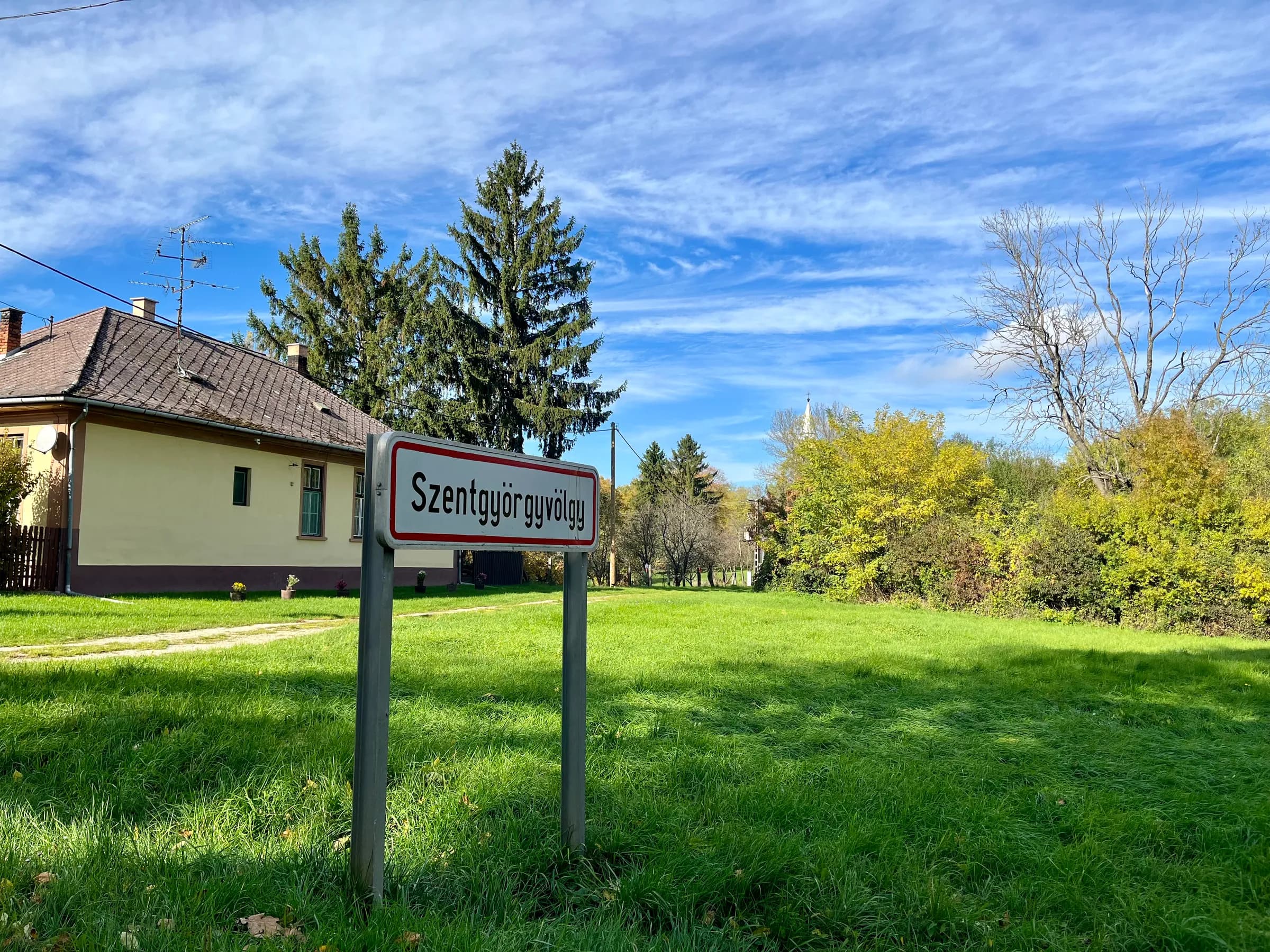
Szentgyörgyvölgy lies on no main road, and perhaps that is its good fortune. The scale and the quiet have survived here — and those are exactly what brings people to us today.
A name given by a legend
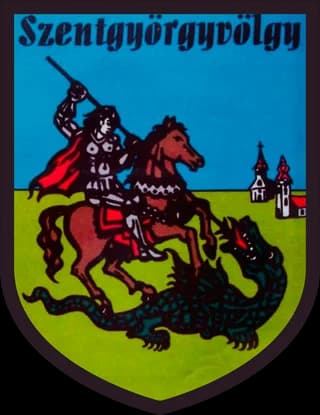
Our village carries the name of Saint George the martyr, and a church was raised here in his honour. In the legend the knight kills the dragon, and it is that very moment which found its way onto our coat of arms: an armoured rider with his lance, the green beast beneath him, and behind them the two towers of the village. The Hungarian name means, quite literally, the Valley of Saint George.
The first written mention of us comes from the thirteenth century. Much of what followed is what befell every border village in western Hungary: wars came, then borders, and then the twentieth century, which for a time turned this landscape into a closed military zone. The memorial to the deported speaks of that as well — quietly, in the middle of the village.
And yet the village has kept its Őrség character: streets running up the hillside, a wooden bell tower, and the forest beginning where the gardens end. Here it is not the calendar that tells you which month it is, but the dust of summer, the fog of autumn and the woodsmoke drifting through winter.
What life is like here today
Szentgyörgyvölgy is still a working village. We have a shop, a library, a community house, a doctor's surgery and a home for the elderly, and we have crafts that are still practised by hand. Our weeks are shaped by surgery hours and the waste calendar, and our year by the feast days: the church fair, the Day of Older People, and the lighting of the Advent candles.
And the most important thing does not show on any map. Here people still know who lives three houses away, and if trouble comes, no one has to go far to find help — when it matters, the members of our community can count on one another. In a village this size that is not a slogan, but simply part of everyday life.